
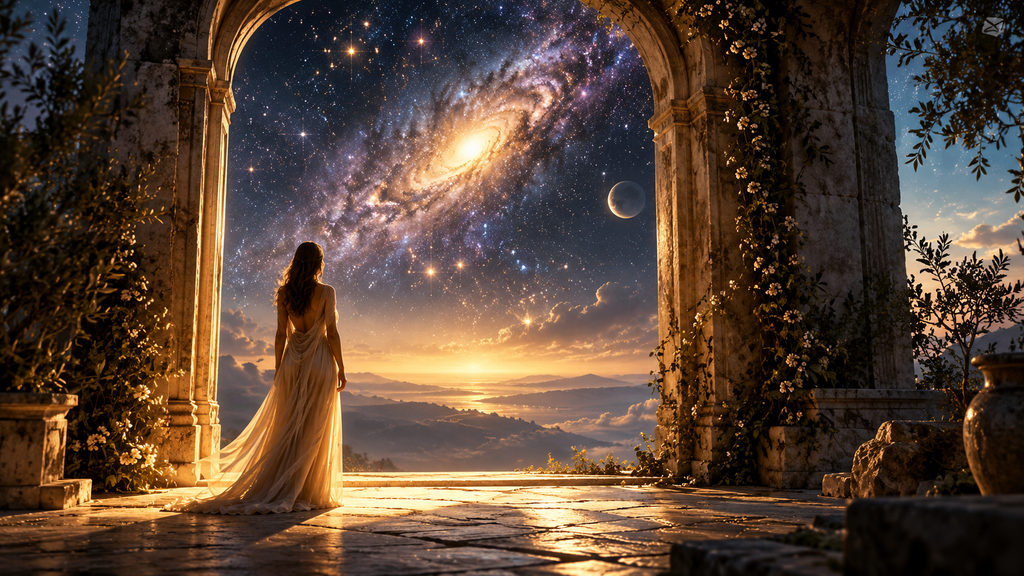
Magic isn’t confined to ancient rituals or supernatural beliefs; it also appears in everyday life through intuition, meaningful coincidences, and moments of wonder. In this article, we explore the psychology of magic, tracing its historical and metaphysical roots to understand why humans are drawn to mystery. Discover what our fascination with the unknown reveals about human nature and how embracing wonder can enrich our lives.
“The most beautiful thing we can experience is the mysterious. It is the source of all true art and science.”
– Albert Einstein
There’s something about the mysterious that has always captivated the human imagination. This sublime realm calls us to explore its impenetrable domain and the psychology of magic.
From ancient civilizations that consulted oracles and performed sacred rituals to modern societies fascinated by the supernatural, we’ve long been drawn to the possibility that reality holds more than meets the eye. Despite centuries of scientific discovery, our fascination with the unknown remains remarkably persistent.
I’ve always been drawn to this mysterious side of life. Over the years, I’ve explored esoteric practices such as tarot, astrology, oracle cards, and palmistry, not simply for their predictions, but for the symbolism, stories, and deeper questions they invite us to consider.
I’ve also been fascinated by ancient mysteries, unexplained phenomena, and the art of magic itself. There’s something thrilling about encountering an experience that challenges our understanding of what’s possible.
For me, magic represents a doorway into another realm of experience, one that transcends the familiar boundaries of everyday life. It evokes a sense of the sublime, that overwhelming mixture of awe, beauty, and mystery we feel when confronted with something greater than ourselves.
It’s the same feeling I remember from childhood, when the world seemed filled with endless possibilities, and even the simplest discoveries could inspire wonder.
As we grow older, however, that sense of enchantment can gradually fade. We become preoccupied with responsibilities, routines, and practical concerns. We learn to prioritize logic, efficiency, and certainty, often at the expense of curiosity and imagination. The world that once seemed limitless begins to feel increasingly predictable.
Our ancestors experienced reality through a different lens. In ancient Egypt, Greece, Mesopotamia, and countless other cultures, the natural and supernatural were often understood as interconnected. Dreams could carry divine messages, celestial events could signal important changes, and rituals offered ways to communicate with unseen forces.
Their understanding of the world wasn’t devoid of reason or observation, but it was shaped by spiritual and symbolic frameworks that gave mystery a central place in human experience.
We can still glimpse this relationship with the unknown in the artifacts, sacred texts, elaborate ceremonies, and magnificent works of art they left behind. These creations reveal civilizations that devoted extraordinary attention to questions about existence, destiny, death, and humanity’s place in the cosmos.
Their beliefs weren’t always accurate, and some were rooted in fear or superstition, but they reflected a profound desire to understand what lay beyond ordinary perception.
Today, science and technology have transformed our relationship with the unknown. We can map distant galaxies, decode the human genome, and access vast amounts of information within seconds. These achievements are extraordinary, and they deserve our admiration.
Yet, I sometimes wonder whether our growing ability to explain and predict the world has also made us less comfortable with the things we cannot understand. We are, after all, natural pattern seekers. Our minds constantly search for connections, explanations, and certainty.
When something defies our expectations, our instinct is often to categorize it, rationalize it, or dismiss it altogether.
But not every experience needs to be neatly explained to hold meaning. Some mysteries invite us to linger in uncertainty, to question our assumptions, and to recognize the limits of our knowledge.
I believe there’s tremendous value in preserving that openness. A healthy respect for the unknown can cultivate humility, deepen our appreciation of existence, and remind us that not everything lies within our control. It can also awaken the childlike curiosity that encourages exploration, creativity, and discovery.

This doesn’t mean abandoning reason in favor of superstition. Rather, it means allowing rational inquiry and wonder to coexist. Science can illuminate the mechanisms of the universe while leaving us profoundly moved by its beauty. We can question extraordinary claims without losing our capacity to be astonished.
The psychology of magic offers a fascinating window into this delicate balance. By exploring the ancient roots of magical beliefs, the workings of the human mind, and the significance of rituals and meaningful coincidences, we can better understand why mystery continues to enchant us—and how reclaiming a little of that enchantment can enrich our everyday lives.
When Magic Was Part of Everyday Life
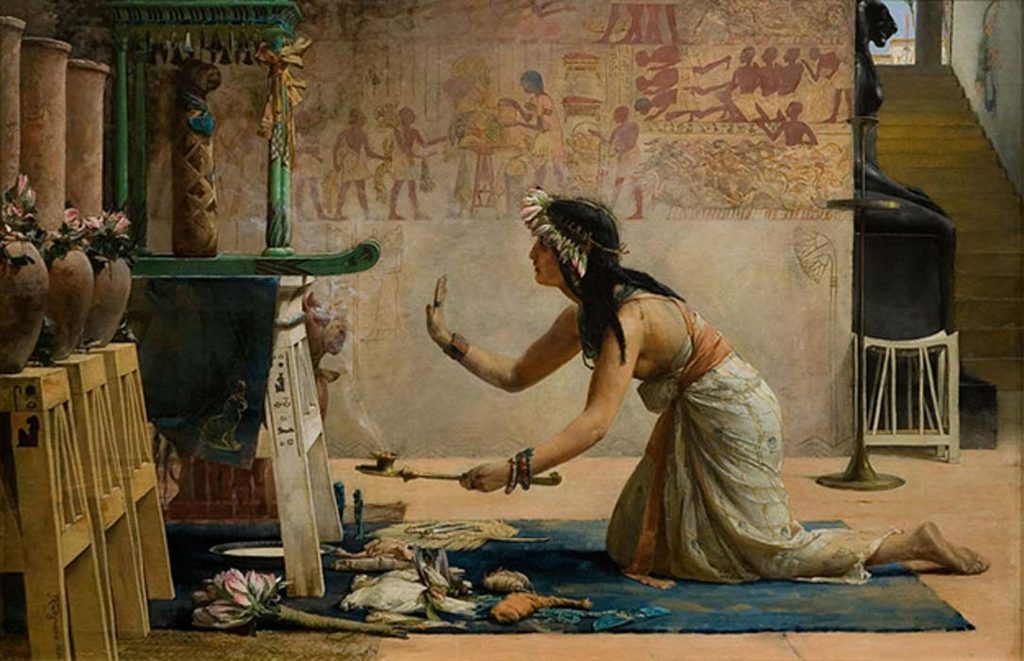
Long before magic became associated with stage illusions and fantasy novels, it was woven into everyday existence. Across ancient civilizations, people believed invisible forces influenced their health, relationships, and destiny. Magic offered a way to understand these forces and sometimes even influence them.
In ancient Egypt, magic was known as heka, a divine power believed to have existed since creation. Egyptians wore protective amulets, including the Eye of Horus, which symbolized healing and protection. According to Egyptian mythology, Horus lost his eye during a struggle with Seth, but it was subsequently restored. The eye became a powerful symbol of wholeness, illustrating how mythology and magical beliefs shaped daily life.
The ancient Greeks also sought guidance from the unseen world. At the Oracle of Delphi, the priestess Pythia delivered prophecies believed to come from Apollo. One famous account, recorded by the historian Herodotus, describes how the Athenians received a cryptic prophecy advising them to rely on a “wooden wall” against Persian invasion. The statesman Themistocles interpreted this as a reference to their fleet of ships, demonstrating how prophecies could influence decisions with enormous consequences.
Centuries later, Renaissance thinkers such as Marsilio Ficino and Paracelsus explored connections between humanity, nature, and the cosmos. Alchemy, astrology, and natural philosophy often overlapped, reflecting a worldview in which the universe was filled with hidden relationships waiting to be understood.
Although science has transformed our understanding of reality, the impulses behind these traditions remain familiar. We still search for signs, trust our intuition, and seek reassurance when facing uncertainty.
Perhaps what connects us most profoundly to our ancestors isn’t a belief in supernatural powers, but a shared longing to find meaning, influence our circumstances, and feel connected to something greater than ourselves.
Why the Human Mind Believes in Magic
Why do we continue to believe in magic, even in an age dominated by science and reason? The answer lies partly in how our brains are wired. Humans are natural pattern seekers, constantly searching for connections and meaning. While this ability helps us navigate the world, it can also lead us to perceive significance in random events.
Psychologists call this tendency apophenia. You might think about an old friend moments before they call or repeatedly notice the same numbers during a major life transition. Such coincidences can feel extraordinary, even when chance offers a plausible explanation.
Our attraction to magical thinking also reflects a desire for control. In a 2008 study published in Science, psychologists Jennifer Whitson and Adam Galinsky conducted six experiments examining how uncertainty influences perception. They found that participants who experienced a lack of control were more likely to identify nonexistent patterns, perceive conspiracies, and develop superstitious beliefs.
Interestingly, magical thinking isn’t confined to people who lack scientific knowledge. In her 2016 paper, Believing What We Do Not Believe, psychologist Jane Risen explained how even intelligent, rational adults sometimes engage in superstitious behavior despite recognizing its irrationality. Someone might dismiss lucky charms as nonsense yet still carry one to an important interview.
This apparent contradiction reveals something fascinating about the psychology of magic: our intuitive and analytical minds don’t always agree. Emotional reassurance can sometimes outweigh logical reasoning, particularly when the stakes feel high.
Confirmation bias further strengthens magical beliefs. We remember predictions that come true while overlooking those that fail, gradually reinforcing our conviction that unseen forces are at work.
Yet understanding these mechanisms doesn’t mean abandoning our sense of wonder. Rather, it encourages us to approach mysterious experiences with curiosity and discernment.
I believe that the greatest lesson is that we can appreciate life’s mysteries without needing to explain every coincidence as supernatural—or dismiss every meaningful experience as insignificant.
The Hidden Power of Ritual, Symbols, and Belief

Throughout history, humans have used rituals and symbols to make sense of life’s uncertainties. From ancient ceremonies to modern mindfulness practices, these traditions reflect our desire to create meaning, establish a sense of control, and feel connected to something greater than ourselves.
Consider Saturnalia, an ancient Roman festival honoring the god Saturn. Celebrated with feasting, gift-giving, and temporary reversals of social conventions, it offered a break from everyday hierarchies. Beyond its religious significance, the festival brought communities together through shared experiences and symbolic traditions.
While our rituals may look different today, they often serve similar psychological purposes. Lighting a candle before meditation, wearing a lucky charm, or following a familiar morning routine can provide reassurance and emotional stability, particularly during uncertain times.
Research supports this connection. In a 2018 review published in Personality and Social Psychology Review, psychologist Nicholas Hobson and his colleagues examined how rituals influence emotional regulation, performance, and social connection. Their analysis suggests that structured, meaningful actions can help us manage difficult emotions and create a greater sense of stability.
But rituals aren’t powerful simply because of what we do. Their significance also comes from what we believe they represent. The placebo effect, for example, demonstrates how expectations can influence certain physical symptoms and psychological responses, revealing the complex relationship between belief, perception, and experience.
Symbols work in much the same way. A wedding ring, family heirloom, or cherished photograph may be an ordinary object, yet its emotional significance can be profound. We imbue these objects with meaning, transforming them into reminders of love, identity, and connection.
This reveals something fascinating about the psychology of magic: the power of ritual doesn’t necessarily lie in changing the world around us, but in changing how we experience and respond to it. And just as we assign meaning to rituals and objects, we often find significance in unexpected events and coincidences, sometimes interpreting them as signs of something greater at work.
Magic, Synchronicity, and the Search for Meaning
Our tendency to find meaning extends beyond the rituals we perform and the objects we treasure. Sometimes, it emerges unexpectedly through coincidences that feel too extraordinary to dismiss.
Have you ever thought about someone you haven’t spoken to in years, only to receive an unexpected message from them? Or experienced an encounter so perfectly timed that it seemed almost orchestrated? Such moments can leave us wondering whether invisible connections exist between seemingly unrelated events.
Swiss psychiatrist Carl Jung explored this phenomenon through his concept of synchronicity, which he described as meaningful coincidences without an apparent causal connection.
In his 1952 essay, Synchronicity: An Acausal Connecting Principle, Jung recounted an unusual incident involving a patient who was struggling to make progress in therapy. During one session, she described a dream in which she received a golden scarab beetle. At that moment, Jung heard tapping at the window. He opened it and caught a rose-chafer beetle whose golden-green appearance resembled the insect in her dream.
Jung believed this coincidence helped break through his patient’s psychological resistance, allowing her treatment to progress. For him, the incident suggested that our inner experiences and external events might sometimes be connected through meaning rather than conventional cause and effect.
The psychology of magic offers another perspective on these extraordinary experiences. Our brains naturally search for patterns, especially when events carry emotional significance. We also tend to remember remarkable coincidences while overlooking countless ordinary occurrences.
Yet understanding these mechanisms doesn’t diminish the personal meaning such experiences can hold. An unexpected encounter might inspire us to reconnect with someone, reconsider a decision, or recognize an overlooked desire.
The real value of these moments may lie not in proving that the universe sends us messages, but in encouraging us to pay closer attention to our inner lives. We don’t need to explain every mystery to discover meaning within it.
How to Create More Magic in Everyday Life

Magic doesn’t always require extraordinary circumstances or supernatural explanations. As the psychology of magic reveals, much of its enchantment comes from how we perceive and engage with the world. By cultivating curiosity, intention, and wonder, we can transform ordinary experiences into moments of meaning and enchantment.
Here are five practical ways to create more magic in your everyday life:
1. Seek Out Experiences That Inspire Awe
Take a 15-minute walk in nature without checking your phone, watch a sunrise, or spend an evening stargazing. Visit an art gallery, attend a live performance, or listen to a moving piece of music with your eyes closed. Research suggests that experiencing awe can broaden our perspective and enhance well-being.
2. Turn Ordinary Routines Into Meaningful Rituals
Choose one daily activity and give it greater intention. For example, begin each morning by lighting a candle and writing down three things you’re grateful for. Alternatively, create a Sunday evening ritual of reflecting on the past week and setting intentions for the next. The goal is to turn habitual actions into moments of mindfulness and purpose.
3. Stay Curious About the Unknown
Set aside 20 minutes each week to explore something that challenges your understanding of the world. Read about an ancient civilization, listen to a podcast on consciousness, or investigate an intriguing scientific mystery. Write down one question you don’t have an answer to and explore different perspectives without rushing to a conclusion.
4. Find Meaning in Unexpected Moments
Keep a small journal of unusual coincidences, intuitive impressions, or unexpected encounters. When something catches your attention, ask yourself: Why does this feel significant to me? What might it reveal about my current concerns or aspirations? Use these experiences as prompts for reflection rather than definitive signs of destiny.
5. Make Room for Play and Spontaneity
Schedule one small adventure each month. Explore a neighborhood you’ve never visited, take a creative workshop, revisit a childhood hobby, or surprise someone with a thoughtful gesture. Even something as simple as taking a different route home can introduce novelty and unexpected delight.
Ultimately, creating more magic in everyday life isn’t about escaping reality. It’s about experiencing it more fully, with greater wonder, intention, and appreciation. This is the real essence of the psychology of magic.
Magic has always been a mirror reflecting humanity’s deepest hopes, fears, and longing for meaning. From ancient rituals to modern psychology, our fascination with the mysterious reminds us that life holds more wonder than we often recognize.
Yet, the psychology of magic isn’t something we need to chase or summon, but a hidden melody woven into the ordinary moments of our lives, waiting for us to listen.
When we approach the world with curiosity, imagination, and an open heart, even the simplest experiences can become extraordinary. The real magic lies not in changing reality, but in changing how you choose to see it.
All my best on your journey,
Seline

Question for you: What can the psychology of magic teach us about our fascination with the unknown, and how can embracing mystery enrich our everyday lives?
Did you like this post? Sign up below, and I’ll send you more awesome posts like this every week.

Have Your Say