

Life rarely unfolds exactly as planned, and knowing when to change direction is an essential skill. Pivoting in life involves recognizing when familiar paths no longer serve us and having the courage to explore new possibilities. Discover why adaptability matters more than ever and how thoughtful course corrections can lead to greater personal growth, resilience, and fulfillment.
“If you don’t like something, change it. If you can’t change it, change your attitude.”
— Maya Angelou
We often approach life as though it were a journey with a predetermined destination. We set goals, make plans, and chart a course toward the future we envision.
Along the way, we invest time and energy in building careers, nurturing relationships, and creating lives that reflect our aspirations.
But what happens when the path we’ve chosen no longer takes us where we want to go? Or when the person we’ve become no longer shares the dreams of the person who first set out on that journey?
In his 2005 Stanford commencement address, Steve Jobs reflected on how dropping out of college unexpectedly led him to study calligraphy, an interest that would later influence the typography of Apple’s Macintosh computer. At the time, he couldn’t have anticipated how those seemingly unrelated experiences would connect. As he famously observed, “You can only connect them looking backward.”
His story reminds us that life’s apparent detours can become meaningful turning points, revealing opportunities we might never have discovered had everything unfolded according to plan.
I’ve come to appreciate this through my own experiences and observations of human nature. One of the most fascinating aspects of being human is our capacity to evolve. We aren’t static beings with fixed identities, interests, and aspirations.
As we move through life, we gain new perspectives, uncover unexpected talents, and discover dimensions of ourselves we didn’t previously know existed.
Sometimes, our priorities shift as we develop a deeper understanding of what brings us fulfillment. Meanwhile, the world around us continues to change, presenting circumstances and opportunities that may not have existed when we made our original plans.
We’re constantly navigating two evolving landscapes: the world within us and the world around us. Learning to respond thoughtfully to both is an essential part of living intentionally.
Compared with previous generations, many of whom faced stronger expectations to remain in the same professions or personal circumstances, we now have greater freedom to explore alternative paths.
Technology, flexible working arrangements, entrepreneurship, and changing social norms have expanded our possibilities. We can pursue different interests, develop new skills, and reinvent aspects of our lives without necessarily dismantling everything we’ve built.
Of course, this doesn’t mean we should become perpetual chameleons, changing direction whenever something new captures our attention. I believe a meaningful life requires a stable foundation of values, commitments, and principles. Without that grounding, flexibility can easily become aimlessness.
The challenge is to remain anchored in what matters while allowing ourselves the freedom to evolve.
I’ve personally pivoted several times throughout my life, and those experiences have taught me that changing direction isn’t necessarily an admission of failure. Sometimes, a plan that doesn’t work out provides valuable information about what isn’t right for us, what we might approach differently, or where our efforts could be better directed.
I like to think of life as a treasure hunt. We follow clues, explore unfamiliar territory, and occasionally discover that what we’re searching for isn’t where we originally expected to find it. Each experience, including our disappointments and wrong turns, can offer insights that guide us toward new possibilities.
Seen this way, pivoting in life isn’t about abandoning the journey. It’s about using what we’ve learned to navigate it more wisely.

Having experienced the benefits of changing course myself, I’ve come to regard pivoting in life as an art form—one that combines self-awareness, courage, discernment, and adaptability. It’s a skill I believe we can all benefit from cultivating, particularly in a world where both our circumstances and our understanding of ourselves are continually evolving.
Why Pivoting in Life Has Become an Essential Skill
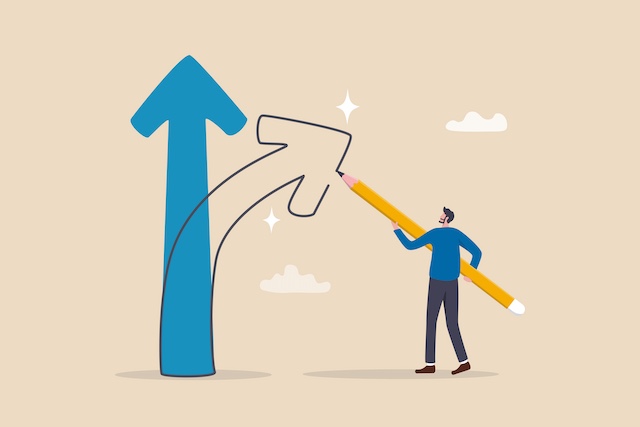
For much of modern history, stability was associated with consistency. People were encouraged to choose a career, establish themselves in a profession, build a family, and follow a relatively predictable path toward retirement.
Success was often measured by how steadily we progressed along that trajectory. While this approach offered a sense of security and direction, it rested on the assumption that the world around us would remain reasonably stable.
Today, that assumption is increasingly difficult to sustain.
Economic uncertainty, evolving workplace expectations, and changing social norms have made traditional paths less predictable while opening doors to new possibilities. Careers are no longer necessarily linear, lifestyles are becoming more varied, and the choices available to us continue to expand. In this environment, the ability to reassess our circumstances and adjust our direction has become an essential skill for maintaining both stability and personal fulfillment.
Yet pivoting in life isn’t simply about adapting to changes around us. It’s also about recognizing when our own priorities, interests, and aspirations have evolved, and allowing our choices to reflect the people we’re becoming.
The aspirations that guided us in our twenties may no longer reflect our priorities in our forties or sixties. A career that once provided excitement and purpose might eventually feel limiting. A lifestyle that previously suited us may no longer support our well-being.
As we accumulate experiences, encounter new perspectives, and deepen our understanding of ourselves, our definition of a fulfilling life naturally evolves.
Consider Vera Wang, who initially dreamed of becoming an Olympic figure skater. After failing to qualify for the U.S. Olympic team, she redirected her ambitions toward fashion, working as an editor at Vogue and later as a design director at Ralph Lauren. At 40, she launched her own bridal fashion business, eventually establishing herself as one of the world’s most celebrated designers.
Wang’s journey illustrates an important distinction: changing direction doesn’t necessarily mean abandoning our larger aspirations. Sometimes, the skills, experiences, and passions we develop along one path become the foundation for success along another.
Of course, not every pivot results in extraordinary success, nor should reinvention become an end in itself. There is considerable value in commitment, consistency, and building upon what we’ve already established. The challenge is recognizing when those qualities continue to serve us and when they begin to constrain our possibilities.
Interestingly, the ability to pivoting in life offers a different kind of stability—one rooted not in the certainty of our circumstances, but in our capacity to respond thoughtfully when those circumstances change.
Why We Find It So Difficult to Change Direction
If adaptability is such a valuable skill, why do we often find it so difficult to change course, even when we recognize that our current circumstances are no longer serving us?
Part of the answer lies in how our minds respond to uncertainty and loss. Psychologists have identified several cognitive biases that can make us reluctant to reconsider decisions, particularly when we’ve invested considerable time, energy, or resources in them.
One is the sunk-cost fallacy, which describes our tendency to continue pursuing something because of what we’ve already invested, rather than evaluating whether it remains worthwhile. We might stay in an unfulfilling career because we’ve spent decades building it, or remain committed to a failing project because abandoning it would make our previous efforts feel wasted.
Closely related is loss aversion, a psychological tendency to experience losses more intensely than equivalent gains. The prospect of giving up familiar comforts, financial security, or social standing can overshadow the potential benefits of pursuing a different path. Consequently, we may choose the certainty of an unsatisfying situation over the uncertainty of something potentially better.
Our identities can also become deeply intertwined with the choices we’ve made. When we define ourselves through our professions, relationships, or achievements, changing direction can feel like relinquishing a part of who we are.
This tension is illustrated in the film The Devil Wears Prada. Andy Sachs initially accepts a demanding position at a prestigious fashion magazine as a stepping stone toward her journalistic ambitions. As she becomes increasingly successful, however, she begins sacrificing her relationships and personal values to meet the expectations of her workplace. Eventually, she recognizes that the professional success she’s pursuing is taking her further away from the life she originally wanted.
Her experience highlights a familiar dilemma: sometimes, the very things we’ve worked hard to achieve become difficult to walk away from, even when they no longer align with our priorities.
Recognizing these psychological barriers doesn’t automatically make changing direction easier. However, it allows us to question whether we’re remaining on a particular path because it genuinely serves us or simply because leaving it feels uncomfortable.
After all, the effort we’ve invested in our past shouldn’t automatically determine the choices we make about our future and pivoting in life.
Knowing When to Persist and When to Pivot

While changing direction can open the door to new possibilities, not every obstacle is a sign that we should abandon our current path. Some of life’s most meaningful achievements require patience, perseverance, and the willingness to work through periods of uncertainty or discomfort. The challenge lies in distinguishing between difficulties that are part of the growth process and those that suggest it’s time to reconsider our approach.
We live in a culture that celebrates persistence. Stories of successful entrepreneurs, athletes, and artists often emphasize their refusal to give up despite repeated setbacks. While these narratives can be inspiring, they sometimes overlook an equally important skill: knowing when continued effort is unlikely to produce a worthwhile outcome.
In her book Quit: The Power of Knowing When to Walk Away, former professional poker player and decision-making expert Annie Duke challenges the assumption that perseverance is always virtuous. She explains how our attachment to existing goals can cloud our judgment, making it difficult to recognize when circumstances have changed or when the costs of continuing outweigh the potential benefits.
An important distinction is whether we’re experiencing productive discomfort or persistent misalignment. Productive discomfort often accompanies worthwhile challenges, such as learning a new skill, building a business, or navigating a difficult but meaningful relationship.
Persistent misalignment, however, occurs when our efforts repeatedly conflict with our values, needs, or long-term aspirations, with little indication that the situation is improving.
Of course, the distinction isn’t always obvious. A temporary setback can feel like a permanent obstacle, while a fundamentally unsuitable situation can appear manageable when viewed one day at a time.
This is why periodically reassessing our direction is so valuable. We might ask ourselves: Am I continuing because this goal still matters to me, or because I’ve already invested so much? Have my circumstances changed since I made this decision? And perhaps most importantly, if I remain on this path for another five years, will I be satisfied with where it leads?
These questions encourage us to look beyond our immediate emotions and consider the longer-term consequences of our choices.
Ultimately, perseverance and adaptability aren’t opposing virtues. True wisdom lies in recognizing when to remain committed to a meaningful goal and when changing direction and pivoting in life offers a better way forward.
The Art of Pivoting in Life Wisely: How to Change Direction Without Losing Your Way

Recognizing that something needs to change is one thing; knowing how to make that change thoughtfully is another. While the idea of starting fresh can be appealing, impulsive decisions may create more problems than they solve. The art of pivoting lies in balancing the desire for something different with a realistic understanding of what we stand to gain, preserve, or sacrifice.
Rather than viewing change as an all-or-nothing proposition, we can approach it as a process of deliberate adjustment, guided by these few important principles.
1. Revisit Your Values Before Revising Your Plans
Before making a significant change, consider what matters most to you at this stage of your life. Our values serve as an internal compass, helping us distinguish between fleeting dissatisfaction and a genuine need for a different direction.
For instance, someone who once prioritized professional advancement may gradually place greater importance on family, creativity, or personal well-being. Recognizing this shift doesn’t invalidate their earlier ambitions; it simply acknowledges that their priorities have evolved.
2. Distinguish the Destination From the Route
Sometimes, the problem isn’t what we’re trying to achieve but how we’re attempting to achieve it.
A person who values creativity, for example, may feel constrained in a conventional corporate role. Rather than immediately abandoning their career, they might explore opportunities within their organization, negotiate a different working arrangement, or develop a creative pursuit alongside their existing responsibilities.
By separating our underlying aspirations from the methods we use to pursue them, we create room for alternatives that might otherwise go unnoticed.
3. Experiment Before Making a Dramatic Leap
Not every pivot requires a sweeping transformation. In fact, smaller, reversible changes can help us test new possibilities without unnecessarily jeopardizing the stability we’ve worked hard to establish.
Someone considering a career change might begin by taking a course, volunteering, or pursuing a side project. These experiences provide valuable information about whether a new direction genuinely suits them, rather than relying entirely on imagination or idealized expectations.
The film The Secret Life of Walter Mitty offers a memorable illustration of how action can expand our sense of possibility. Walter, accustomed to retreating into elaborate daydreams, gradually begins participating more fully in life when an unexpected professional challenge sends him on an extraordinary journey.
Although his adventures are considerably more dramatic than most real-life pivots, they highlight how stepping beyond familiar routines can reveal capabilities we didn’t know we possessed.
4. Accept That Every Choice Involves Trade-offs
Even a well-considered pivot may involve sacrifices. Greater independence might come with reduced financial security. A more fulfilling career could require relinquishing professional status, while pursuing personal growth may disrupt established routines or relationships.
The objective isn’t to find a path without disadvantages, but to determine which compromises we’re willing to make in exchange for what matters most.
Pivoting wisely means neither clinging rigidly to the familiar nor pursuing change for its own sake. It means remaining open to new possibilities while making deliberate choices that reflect our evolving values, circumstances, and aspirations.
Life rarely unfolds along a straight, predictable path. As we grow and circumstances change, we may find ourselves at unexpected crossroads, questioning whether the direction we once chose still leads toward the life we wish to create.
There’s wisdom in knowing when to persevere, just as there’s courage in recognizing when it’s time to change course. Neither choice diminishes what you’ve accomplished or the experiences that have shaped you.
Think of your life as a journey guided by a map drawn with the knowledge, hopes, and dreams you held at the time. As you discover new possibilities and gain a clearer understanding of yourself, you may need to redraw parts of that map.
Honor the roads that have brought you this far, but don’t let them determine every step that lies ahead. You are still becoming, still discovering, and still free to choose a direction that feels more authentically your own.
All my best on your journey,
Seline

Question for you: What area of your life could benefit from a change in direction, and how might embracing the art of pivoting help you move toward a more fulfilling future?
Did you like this post? Sign up below, and I’ll send you more awesome posts like this every week.

Have Your Say