

Throughout history, powerful historical leaders have built empires and shaped civilizations, yet even the most influential struggled to control their destinies. This article explores the paradox of power through the triumphs and failures of figures like Napoleon and Cleopatra, revealing how ambition, ego, and the pursuit of control can become vulnerabilities. Their stories offer timeless lessons about leadership, uncertainty, and recognizing the limits of our influence.
“Power tends to corrupt, and absolute power corrupts absolutely.”
— Lord Acton
There’s something humbling about standing face-to-face with someone who lived thousands of years ago. Their world has long disappeared, their ambitions have faded into history, and yet something of their presence remains, preserved in stone.
I was reminded of this during a visit to the British Museum this summer. As I wandered through the galleries devoted to ancient Egypt, Greece, and Rome, I found myself captivated by the sculptures and busts lining the halls. Some depicted powerful rulers whose names have endured for centuries; others portrayed individuals whose identities remain a mystery.
I studied their expressions and wondered about the lives behind those faces. What did they dream of accomplishing? What kept them awake at night? Did they ever imagine that strangers would be contemplating their likenesses centuries later?
To me, historical artifacts are far more than objects of aesthetic appreciation. They carry the spirit and symbolism of civilizations that once flourished, with stories embedded in every sculpture, inscription, and weathered fragment.
I find the stories of historical leaders especially fascinating. These were individuals whose decisions could alter the destinies of entire nations. Some governed with foresight and restraint, while others pursued expansion and dominance at tremendous human cost. Yet behind their grand titles and impressive monuments were people confronted with choices, limitations, and consequences they couldn’t always foresee.
What strikes me is how relevant their experiences remain today. We live in a world that urgently needs thoughtful, responsible leadership, where authority is exercised with wisdom rather than merely asserted through force or status. History offers us a remarkable opportunity to examine what happens when power is used constructively, misjudged, or taken too far.
These lessons resonate with me personally, too. In managing a business and guiding a team, I’ve come to appreciate that leadership involves more than making decisions or giving directions. It requires listening, exercising sound judgment, and recognizing how our choices affect others.
Although my responsibilities bear little resemblance to those of an emperor or monarch, the importance of using influence responsibly is something I think about in my own life.
Of course, our relationship with power and control extends far beyond leadership. Think about how much energy we devote to making life unfold according to plan. We work hard to build secure careers, nurture relationships, protect our families, and create a future that feels stable and predictable. We make plans, anticipate obstacles, and sometimes convince ourselves that if we do everything right, nothing can go wrong.
But life rarely honors such arrangements.
A carefully constructed career can take an unexpected turn. A relationship can change despite our best efforts. Circumstances beyond our influence can disrupt even the most thoughtful plans. These experiences reveal a distinction we often overlook: having the power to make choices doesn’t mean possessing the ability to determine every outcome.
Psychologists call this tendency to overestimate our influence over events the illusion of control. While a healthy sense of agency helps us navigate life, excessive attachment to particular outcomes can leave us anxious, rigid, or resistant to change.
And therein lies the paradox of power: the more control we seek, the more vulnerable we may become to the very uncertainties we’re trying to escape.
History offers striking examples of this contradiction. The lives of emperors, queens, and philosophers reveal that even extraordinary authority cannot guarantee security, loyalty, or lasting success.
The stories of historical leaders invite us to reconsider what it truly means to be powerful—and whether the greatest strength lies not in controlling everything around us, but in knowing how to respond when life refuses to follow our plans.
1. Napoleon Bonaparte: When Ambition Exceeds Control
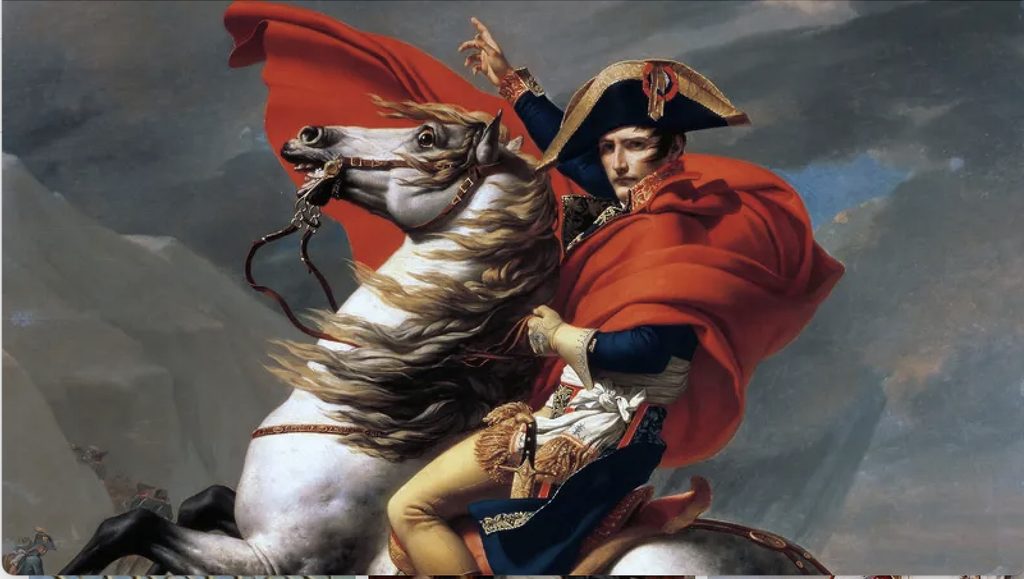

Few historical leaders illustrate the paradox of power as vividly as Napoleon Bonaparte. Rising from an artillery officer during the French Revolution to Emperor of France in 1804, Napoleon reshaped Europe through military innovation, political reforms, and territorial expansion.
At his height, he dominated much of continental Europe. Yet maintaining that influence required more than military victories. His empire depended on fragile alliances, economic cooperation, and the willingness of other nations to accept French authority.
These tensions became evident in 1812, when Napoleon invaded Russia. His objective was not simply territorial conquest but to compel Tsar Alexander I to comply with the Continental System, an economic blockade designed to weaken Britain. Russia’s resistance threatened Napoleon’s broader strategy for maintaining French dominance.
Although Napoleon captured Moscow, he could not force a Russian surrender. His enormous army faced supply shortages, Russian resistance, exhaustion, and eventually devastating winter conditions. The disastrous retreat weakened his empire, contributing to his abdication in 1814 and final defeat at Waterloo in 1815.
Napoleon’s downfall cannot be attributed solely to arrogance. His decisions emerged from genuine geopolitical pressures, strategic calculations, and the challenges of sustaining an expanding empire. Nevertheless, his experience exposes a fundamental contradiction: the greater his power became, the more resources, alliances, and compliance he needed to preserve it.
His story reminds us that even extraordinary capabilities cannot eliminate uncertainty or guarantee desired outcomes.
Put It Into Practice: Know When to Change Course
Whether you’re pursuing a career goal, navigating a relationship, or making an important life decision, it’s easy to cling to a familiar approach simply because it worked before. When things aren’t going as planned, ask yourself whether you’re making progress or holding on out of pride, fear, or habit. Sometimes, changing direction isn’t a sign of failure but an act of wisdom.
2. Cleopatra: The Limits of Political Power and Strategic Alliances
Cleopatra VII, the last active ruler of Egypt’s Ptolemaic dynasty, is one of those historical leaders often remembered for her relationships with Julius Caesar and Mark Antony. Yet behind her romanticized image was a politically astute monarch navigating a dangerous struggle for power in the ancient Mediterranean.
When Cleopatra ascended the throne in 51 BCE, Egypt was wealthy but increasingly vulnerable to Roman interference. Her alliance with Julius Caesar helped her regain her position during a dynastic conflict with her brother, Ptolemy XIII. Following Caesar’s assassination in 44 BCE, she later aligned herself with Mark Antony, whose influence offered another opportunity to protect Egypt’s interests.
These alliances were strategic, but they also exposed the limits of her independence. Egypt’s future became increasingly entangled with Rome’s internal rivalries, particularly the growing conflict between Antony and Octavian.
In 31 BCE, Antony and Cleopatra’s forces suffered a decisive defeat at the Battle of Actium. The following year, Octavian invaded Egypt, and both Antony and Cleopatra died by suicide. Egypt subsequently became a Roman province.
Cleopatra’s downfall was not simply the consequence of misplaced trust or poor judgment. She operated within a political landscape where Rome’s expanding military and economic dominance severely constrained Egypt’s options. Her diplomatic relationships provided temporary advantages, but they could not overcome the broader forces reshaping the Mediterranean world.
Her story reveals an important paradox of power and control: alliances can strengthen our position while simultaneously creating dependencies that limit our freedom to act.
Put It Into Practice: Build Connections Without Losing Your Independence
Whether in your career, friendships, or romantic relationships, strong connections can open doors and provide valuable support. However, avoid placing your entire sense of security or future in someone else’s hands. Nurture your relationships while developing your own resources, judgment, and confidence. Healthy interdependence means valuing others without losing your ability to stand on your own.
3. Louis XIV: The Hidden Costs of Absolute Power
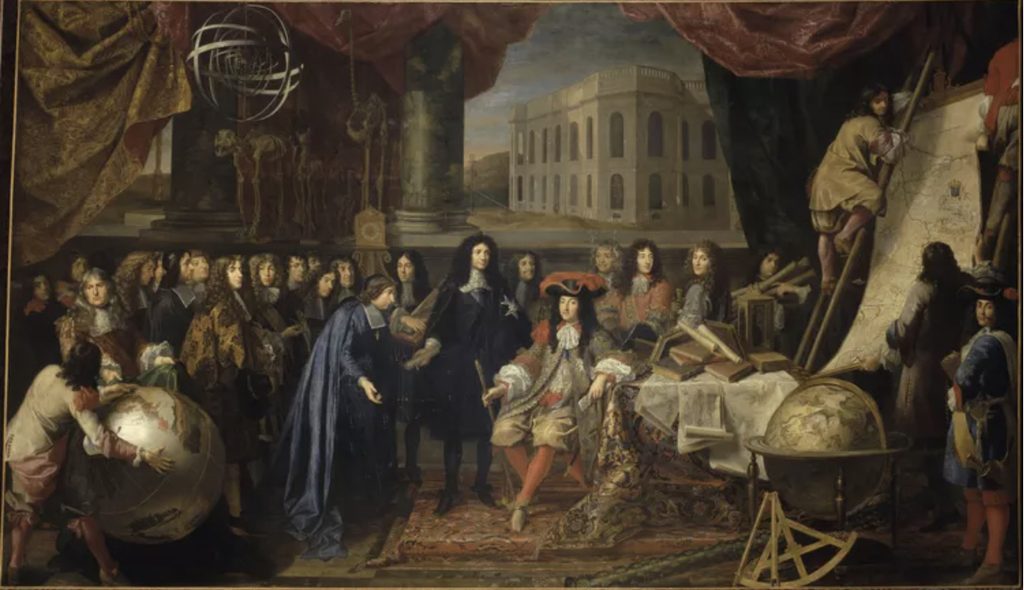
As a young boy, Louis XIV experienced a frightening lesson in the fragility of royal authority. During the Fronde, a series of rebellions that shook France, the young king was forced to flee Paris with his family. The experience unfolded against a backdrop of political unrest that would shape his understanding of power.
When Louis assumed personal control of government in 1661, he was determined to strengthen the monarchy. He transformed Versailles from a royal hunting lodge into a magnificent palace, where influential nobles competed for the privilege of attending his morning dressing ceremony or accompanying him on royal outings. Access to the king became a coveted symbol of status, reinforcing his authority through elaborate rituals and carefully managed patronage.
Known as the Sun King, Louis projected an image of almost limitless power. Yet behind the splendor, his position depended on ministers, administrators, financiers, and regional elites. His costly military campaigns strained France’s resources, while prolonged warfare, taxation, and economic hardship created problems that royal decrees could not simply erase.
By the time Louis died in 1715, France had become a major European cultural and political force, but his long reign had also left substantial financial pressures and unresolved tensions.
His story reveals a central paradox of power and control: the more elaborate the machinery of authority becomes, the more it may depend on people and circumstances beyond any individual’s command. Even the Sun King, one of the more formidable historical leaders, could not govern through personal will alone.
Put It Into Practice: Make Room for Different Perspectives
Whether you’re leading a team, managing a household, or making personal decisions, it’s tempting to surround yourself with people who agree with you. But constant reassurance can create blind spots. Invite honest feedback, listen without becoming defensive, and consider perspectives that challenge your assumptions. Sometimes, those who question your decisions are helping you make better ones.
4. Marcus Aurelius: The Power of Self-Mastery
In 161 CE, Marcus Aurelius became emperor of Rome, inheriting one of the most powerful positions in the ancient world. Yet his reign was far from peaceful. He faced devastating epidemics, military conflicts along Rome’s frontiers, and the immense responsibility of governing an empire stretching across three continents.
Despite his authority, Marcus understood that even an emperor could not command every circumstance. While leading military campaigns along the Danube frontier, he devoted time to writing private philosophical reflections that would later become known as Meditations. Rather than celebrating conquest or imperial glory, these writings explored the challenges of managing anger, confronting mortality, fulfilling one’s duties, and maintaining inner composure amid uncertainty.
Influenced by Stoic philosophy, Marcus believed that while external events often lie beyond our control, we retain responsibility for our judgments and actions. His reflections emphasized reason, self-discipline, and the importance of responding thoughtfully rather than reacting impulsively.
Yet Marcus was no flawless philosopher-king. His reign involved prolonged warfare, difficult political decisions, and the contradictions inherent in exercising imperial authority. His philosophical ideals did not eliminate the moral complexities of governing Rome.
What makes his story compelling is the contrast between his extraordinary public power and his private struggle to cultivate inner discipline. Even while commanding armies and administering an empire, he recognized that authority over others could never guarantee mastery over life’s uncertainties.
Unlike historical leaders who sought greater security through expansion or centralized authority, Marcus offered a different perspective on power and control: lasting strength may come less from directing external events than from learning to govern ourselves.
Put It Into Practice: Master Your Response, Not Every Outcome
When a situation doesn’t unfold as expected, whether it’s a disagreement, professional setback, or unexpected change, resist the urge to control every detail. Instead, ask yourself what remains within your influence. You may not be able to change someone else’s behavior or reverse an outcome, but you can choose how you respond, what you learn, and what you do next.
5. Elizabeth I: The Power of Knowing When to Wait
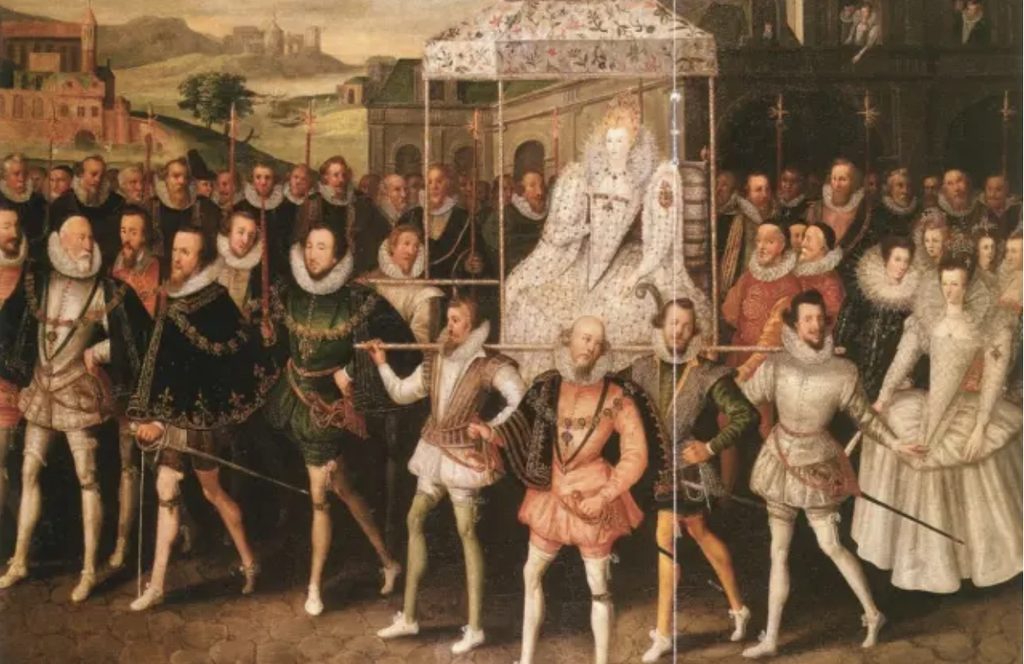
When Elizabeth I ascended the English throne in 1558, she inherited a kingdom divided by religious conflict, burdened by financial difficulties, and vulnerable to foreign threats. As an unmarried female monarch in a male-dominated political world, she faced constant pressure to marry and secure the succession.
Yet Elizabeth turned this apparent vulnerability into a diplomatic advantage. Rather than rushing into marriage, she entertained proposals from powerful European suitors, using the possibility of an alliance to strengthen England’s negotiating position. By keeping her options open, she preserved a degree of independence that marriage to a foreign prince might have complicated.
Her approach extended beyond marriage. Elizabeth frequently delayed major decisions, weighing competing advice and shifting political circumstances before committing herself. This caution sometimes frustrated her advisers, but it also allowed her to navigate a volatile European landscape.
Her restraint was not without consequences. Uncertainty over the succession persisted throughout her reign, while delayed decisions occasionally intensified political tensions. Nevertheless, Elizabeth ruled for 44 years, demonstrating that influence does not always require immediate action.
Her story in the pantheon of historical leaders reveals another dimension of power and control: sometimes, preserving flexibility is more valuable than forcing a premature outcome.
Put It Into Practice: Learn When Not to Act
When facing an important decision, resist the urge to act simply to escape uncertainty. Whether you’re considering a career change, responding to conflict, or making a personal commitment, give yourself time to gather information and weigh your options. Patience isn’t necessarily indecision; sometimes, waiting allows you to make a wiser choice.
History and historical leaders reminds us that even those who wore crowns, commanded armies, and shaped empires could never hold the world entirely in their hands. Power, like the shifting tides, is never ours to possess completely. We may steer our course, but we cannot command the winds or silence the storms.
True wisdom lies not in tightening our grip on life, but in knowing when to hold firm and when to let go. For the greatest freedom comes not from mastering every circumstance, but from trusting our ability to navigate the unknown with courage, grace, and an open heart.
All my best on your journey,
Seline

Question for you: What can historical leaders’ experiences teach you about power and control, and how might those lessons help you navigate uncertainty in your own life?

Have Your Say