

We’re all prone to taking the labels that society places on us to heart. Those labels may reflect on the superficial aspects of our persona but it does not represent our deeper truths. That’s why sticking to our labels can limit us and block us from realizing our full potential. Learn four important reasons why you should not allow labels to define you and how to avoid identifying with them. (Estimated reading time: 6 minutes)
“Labels are for filing. Labels are for clothing. Labels are not for people.”
— Martina Navratilova
“So, tell me about yourself” is a question we’re often asked. Whether you’re in a job interview, on a date, or part of a social gathering, you can be sure you’ll hear this inquiry in some version or another.
The majority of the people will respond to it by naming a few of the key roles that they play in life like their professional title (lawyer, banker, agent, etc.), their country or state of origin (Florida, U.K, China, etc.), and other conventional descriptors.
In most social contexts, a short and straightforward disclosure of our identity is not only efficient, but it’s appropriate. It’s only in our intimate relationships that we should be discerning in how we answer that question. When we dig deeper, do we tend to stick with the labels that society has slapped on us, thus allowing them to define us?
We are but one among many in a global population of seven billion people. Institutions need to maintain order by indoctrinating us into fixed systems of passports, national ID’s, ethnic, and professional classifications. Besides official identities, there are subtle labels that we’re subjected to based on our appearance, sexual orientation, health conditions, and many more.
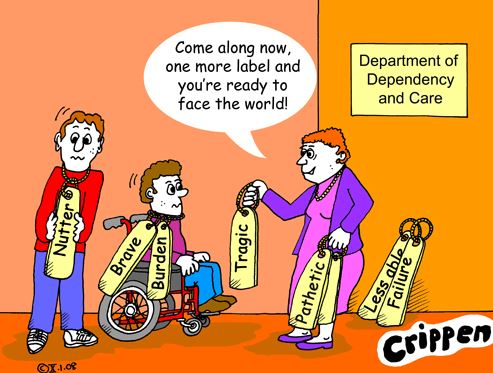
Labels help governments regulate movement and monitor the activities of their citizens. Regulations simplify the complex task of dealing with diverse groups. In fact, we all seek this convenience when we encounter new people. Labeling people is a mental shortcut that helps us avoid putting extra effort into assessing others.
We do, however, need to be wary of overusing labels. If you take societal labels to heart, it could obscure your genuine traits. Labels usually come with a heavy load of predetermined qualities that can box you into a set way of being. By passively taking it in, you’ll begin to believe the labels, resulting in a self-fulfilling prophecy.
According to research, when a teacher gives their students a label like ‘lazy’, ‘naughty’, ‘well-behaved’, there is a strong chance that those students will continue to embody those traits in response. When I was younger, I remember being labeled as ‘hefty’ and ‘big boned’ by my teachers and family.
At first, it dampened my enthusiasm to get into better shape, but I gradually realized that I was not a victim of my genes and that I could change my appearance and health if I were willing to work for it and believe in myself.
What I’ve found over their years, is that subjective labels based on other people’s opinions are often a reflection of their character, rather than mine. It’s a sign of their insecurity and need to control and manipulate others.
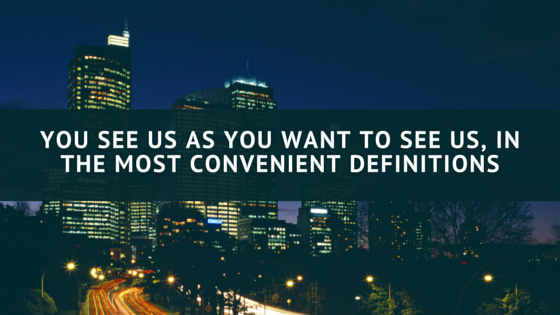
You can shield yourself from them by realizing that you are so much more than your labels. While they may reflect on the superficial layers of your persona, it should not have any bearing on your true essence. They can never capture the limitless nature of your soul and what you are truly capable of achieving.
It’s absurd to believe that beings as complex as humans can be classified into cookie-cutter descriptors. You are the master artist of your life, fully capable of crafting a self-concept that’s self-supporting and meaningful. You can mold your identity by gaining an awareness of the labels that impact how you feel about yourself.
When we live in alignment with our real identity, we’ll naturally extend that freedom to others. We’re less likely to be prejudiced if we’re aware that we can only truly know a person when we take the time to get to know them.
Here are four essential reasons why you shouldn’t allow labels to define you:
1. Labels do not reflect your true identity: Labels are nothing more than ready-made categories created by others. They are mental constructs that have been formed to simplify and standardize how we view others. They are incapable of defining the deeper aspects of our psyche and the complex DNA configuration that gives us our unique characteristics, talents, and desires. Labels can make us lazy and prevent us from delving into the self-exploration needed to excavate our deep-rooted qualities. For example, a Third-Culture Kids passport identity does not reflect the myriad cultural influences that have shaped their outlook.
2. Living by your labels will limit your personal growth: When you subscribe to your labels, you limit how you view yourself and stunt your ability to expand. The defined roles that labels impose will erect walls around your identity that you may feel uncomfortable to cross because of the predictability it offers. Young girls in certain cultures are still raised to believe in old gender roles that dictate women from their tradition should put their career and ambitions on hold, and give more priority to their domestic roles as wives and mothers. This instantly bars her from accessing the resources to develop her skills and gifts.
3. You’ll allow others to define you based on their convenience: By accepting the labels that others give you, you’re inadvertently giving them the permission to reduce you to a type. Even though they may know little or nothing about you, they’ve taken the liberty to size you up based on their own parameters, and the lens through which they see the world. Remember, there’s no reality, only perception, and the labels given to you by others are based on their perspective and experience. Carefully evaluate any feedback from others, while also trying to understand their motives. Are they labeling you because they feel threatened by the possibility of your individual growth and they want to force you to conform? Or are they honestly telling you what they see, with the hope that it could benefit you?
4. Your life choices won’t feel authentic and purposeful: Labels tend to establish the type of roles that we should be playing, and the decisions and life paths we should take. This is not always obvious – it can be covert, below the surface of our conscious awareness. Let’s say you come from a family of doctors, where everyone for the past three generations have been renowned physicians. As a child from this lineage, there may be a subtle expectation that you would follow in your parents’ footsteps and uphold the legacy. But if the field of medicine doesn’t appeal to you, and the mere sight of blood makes you pass out, you’ll need to break away from tradition and do your own thing. Remember that just because someone sees you in a certain way doesn’t mean that you should conform to that role.
The next time that you feel tempted to label yourself or another person, remember that we all have infinite potential. You are a drop in the vast cosmic ocean – an ocean that is undefinable, unquantifiable, and unknowable – you’ll inherit these characteristics when you let go of your labels and give yourself the permission to make a splash in the world.
All my best on your journey,
Seline
Reflection Question: What are some of the common labels that you’ve become accustomed to? How do they impact you?
Did you like this post? Sign up below and I’ll send you more awesome posts like this every week.

I could relate to this…my son is autistic and has other learning delays and disabilities. He has a lot of labels that have been put on him and some of them are good because they help him get the therapy and medical care he needs. However, I am always fighting against the labels controlling who he is and how people see him! I have a shirt I wear a lot that says “See the Able and not the label” and that is what we all have to strive to do better at!