

Dignity is hard to define, but you know it when you see it – someone with dignity carries themselves well. Not only does dignity show in their body language, but also manifests in their instinctive ability to handle whatever life throws at them with calm and class. This makes them well respected by others. Find out how you can foster this trait, make it a natural part of you, and learn why living with dignity matters. (Estimated reading time: 6 minutes)
“Dignity is like a perfume; those who use perfumes are scarcely conscious of them.”
— Queen Christina of Sweden
Our social climate favors individuality and self-expression. If there’s something that irks us, we’re encouraged to share it with others, and “just be ourselves.”
The freedom to express our views is a fundamental human right, and in a time when key social justice issues are bubbling to the surface, ready to be solved, it is a necessity.
But somewhere along the way, we need to ask ourselves, “how much is too much?” when it comes to how we express our opinions and truths.
At what point have we veered from being assertive to aggressive, from wanting to instigate positive change to seeking attention, and from wanting to be heard to talking over others?
Being woke has become trendy in popular culture, with many celebrities and influencers jumping on the bandwagon – but when this trend is taken to an extreme, we lose a way of being that’s subtle, noble, understated, yet powerful.
A dignified demeanor that inspires respect from ourselves and from others has steadily slipped through the cracks of our collective consciousness. With some effort, however, we can foster this trait and make it a natural part of us.
Dignity: A hallmark of self-confidence

Dignity is hard to define, but you know it when you see it. People who live with dignity have a regal bearing and a poise they maintain no matter how tense a situation gets.
A common misconception is that dignity is a quality limited to aristocrats and the upper class. While people from wealthier and educated backgrounds are more likely to be raised with such values, dignity can be emulated by anyone.
You don’t have to have a high net worth or rank. Neither do you have to hide your emotions or assume a stiff-upper-lip stance to be considered a person of dignity. Even in a dog-eat-dog world, it’s still possible to have the social graces that come with dignity.
Whether you’re a farmer living in the countryside or an A-list celebrity, you can cultivate and model humility. Here are four traits that characterize this type:
- High self-worth: confidence that comes with having a sense of self that’s based on your intrinsic qualities and contributions versus power symbols like looks and possessions.
- Humility: a modesty that negates the need to flaunt and show-off to get validation.
- Empathy and compassion: rooting for and supporting others instead of undermining their successes to feel better about yourself and improve your circumstances.
- Emotional intelligence: having the awareness to keep your emotions in check and manage your responses, especially when triggered and in high pressure situations.
These intangible traits form the interior world of a dignified person, and we can see it shine through in both their behavior and appearance.
Walk your talk: Elegance personified
Someone with dignity carries themselves well. Like a swan gliding on a lake, they move gracefully even if their feet are paddling frantically below the surface. They are elegance in motion.
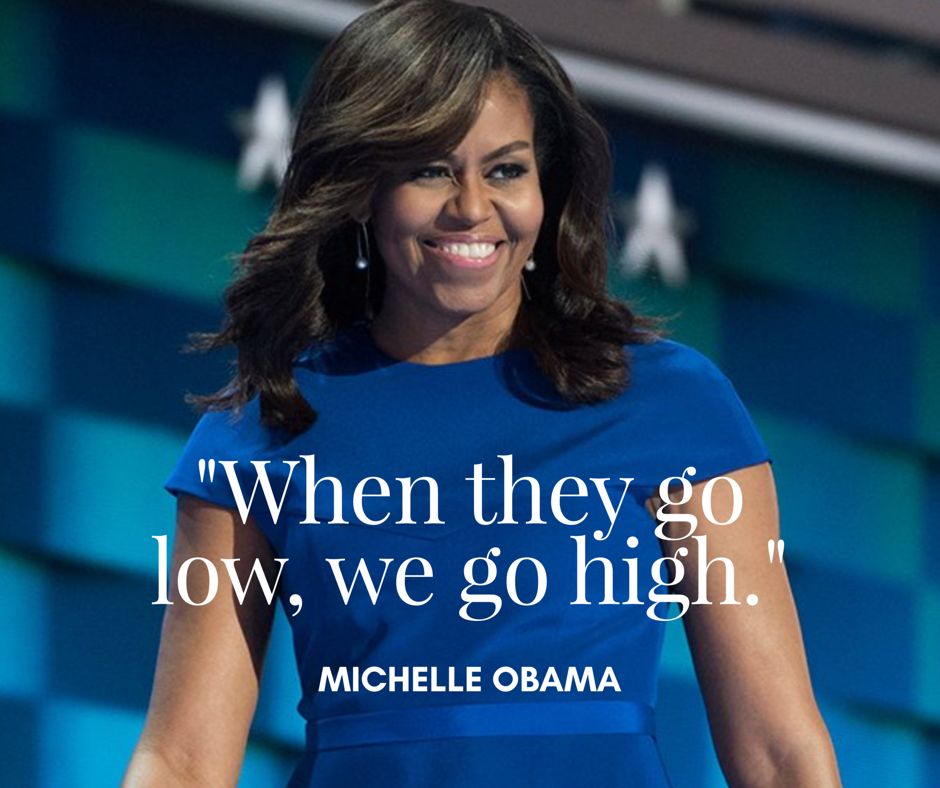
What helps me develop this trait is finding role models who personify this quality. I look at women like Jaqueline Kennedy, Princess Diana, Michelle Obama, and Kate Middleton, whose dignity shows, not only in their body language and fashion sense, but in their instinctive ability to handle whatever life throws at them with calm and class.
The elegance of these women goes beyond the aesthetics of their clothes; it includes their personal conduct. When things don’t work in their favor, dignity helps them stay steady and keep moving forward. They do this without drama, pointing fingers, or requiring pity parties.
Kate Middleton displayed dignity when she went through a major break-up with Prince William before their marriage. During their brief split, many onlookers commended Kate on how well she handled herself during that tumultuous period in her life.
In a documentary, “Prince William at Thirty,” a friend said, “she did not make a fool of herself and crucially she did not talk to the press.” Instead, she continued to lead a normal life and even attended parties, despite being stalked by the paparazzi.
Her ability to handle the potential end of a 10-year highly public relationship with a royal with dignity eventually won the heart of the prince and the admiration of the public.
Kate Middleton didn’t allow the negative events and her critics to bring down. Instead, she took it all in her stride, knowing that things would get better (with or without the prince) because she believed in herself.
Unfortunately, Kate represents a minority in the type of public figures that today’s youth are exposed to. Most of what the youth witness does little to instill humility. They watch reality TV shows where actors scream and throw things at each other, read angry unhinged Tweets from celebrities, and listen to music with crass and vulgar lyrics.
Given such heavy influences, cultivating dignity takes self-discipline. We need to have the drive to stay accountable and be committed to becoming the best version of ourselves.
Cultivating dignity: growing our character
In his book, “The Road to Character,” writer David Brooks expounds on the importance of developing our ‘eulogy virtues’ (deeper virtues that would be mentioned at your funeral), versus ‘resume virtues’ (virtues that you list on your resume and that contribute to your external success).
He laments that society encourages us to develop our resume virtues and rewards those who succeed in that realm instead of those who strive to cultivate their inner life. He writes:
“We live in a culture that teaches us to promote and advertise ourselves and to master the skills required for success, but that gives little encouragement to humility, sympathy, and honest self-confrontation, which are necessary for building character.”
Dignity is a natural byproduct of cultivating character. When we develop what Brooks calls an “inner constancy,” and stay connected to our heart space even in the face of disapproval, we’ll be able to reach a higher level of being. These five tips will help you develop dignity:
1. Take the high road when others don’t play fair: The sad reality is that not everyone is going to be honest and behave ethically. When things get ugly because someone doesn’t play fair, show them how it’s done by responding with thought, maturity, and tact.
2. Respect other people’s opinions: No one likes to be around a dominating person who doesn’t respect their opinions. On the other hand, a dignified person knows that others’ have a right to their opinions and don’t feel the need to overbearingly defend their stance and be right all the time.
3. Don’t brag or be attention-seeking: A person who brags gives off vibes of desperation. No matter how much they have going for them, they come across as insecure and weak. A must-have for dignified behavior is humility and a subtle grace that draws people to them.
4. Practice etiquette and good manners: You don’t have to go to finishing school to know that basic etiquette and good manners go a long way in creating a positive impression. Saying “please,” “thank you,” and being polite, consistent, and reliable matters.
5. Stay grounded, centered, and strong: A dignified person is like a solid oak tree. They are rooted in their being, and have a strong sense of self. They aren’t clingy, needy, or dependent on others. Instead, when challenged, they assertively defend their position.
Dignity is like a breath of fresh air—people who display dignity lift you up with their positive energy and comfort you with their grace. You can’t help but be entranced by their quiet confidence and genuine concern for others. Having that kind of impact on others is something worth aspiring to.
All my best on your journey,
Seline

Question for you: What does living with dignity look and feel like to you? Why do you think dignity matters in our world today?
Did you like this post? Sign up below, and I’ll send you more awesome posts like this every week.

Have Your Say