

Our gut feelings often influence our decision-making. They provide a shortcut to making decisions in a world where we’re bombarded with choices. Your intuition is usually a reliable source of guidance but there are certain condition under which your intuition may not always be right. Before you trust your gut, check to see if you identify with one of these situations where your intuition may not be a reliable source of information. (Estimated reading time: 5 minutes)
“Remember this rule: intuition cannot be trusted in the absence of stable regularities in the environment.”
— Daniel Kahneman
We’ve all had ‘gut feelings. Maybe you’ve had a sense that someone was untrustworthy, despite their outward appearance of sincerity, or you’ve heard an inner voice tell you that a particular work opportunity was right for you, even though you didn’t feel qualified.
Whether you call it your sixth sense or higher guidance, it probably played an essential role in your decision making. This feeling of “knowing” is your intuition, a brain process that gives us the ability to assess situations without the use of analytical reasoning.
The idea that people can make decisions without deliberate, rational thought has intrigued scientists and philosophers. Albert Einstein has been widely quoted as saying: “The intuitive mind is a sacred gift and the rational mind is a faithful servant. We have created a society that honors the servant and has forgotten the gift.”
Although Einstein has been revered for his rationality and reason, he had a deep respect for the intuitive faculty that he drew from in his iconic career.
A similar sentiment is reflected in Walter Isaacson’s biography of Steve Jobs. In it, Jobs shares his belief in the power of intuitive senses and how they had a significant impact on his work:
“Western rational thought is not an innate human characteristic; it is learned and it is the great achievement of Western civilization… The people in the Indian countryside don’t use their intellect like we do, they use their intuition. They learned something else, which is in some ways just as valuable but in other ways is not. That’s the power of intuition and experiential wisdom.”
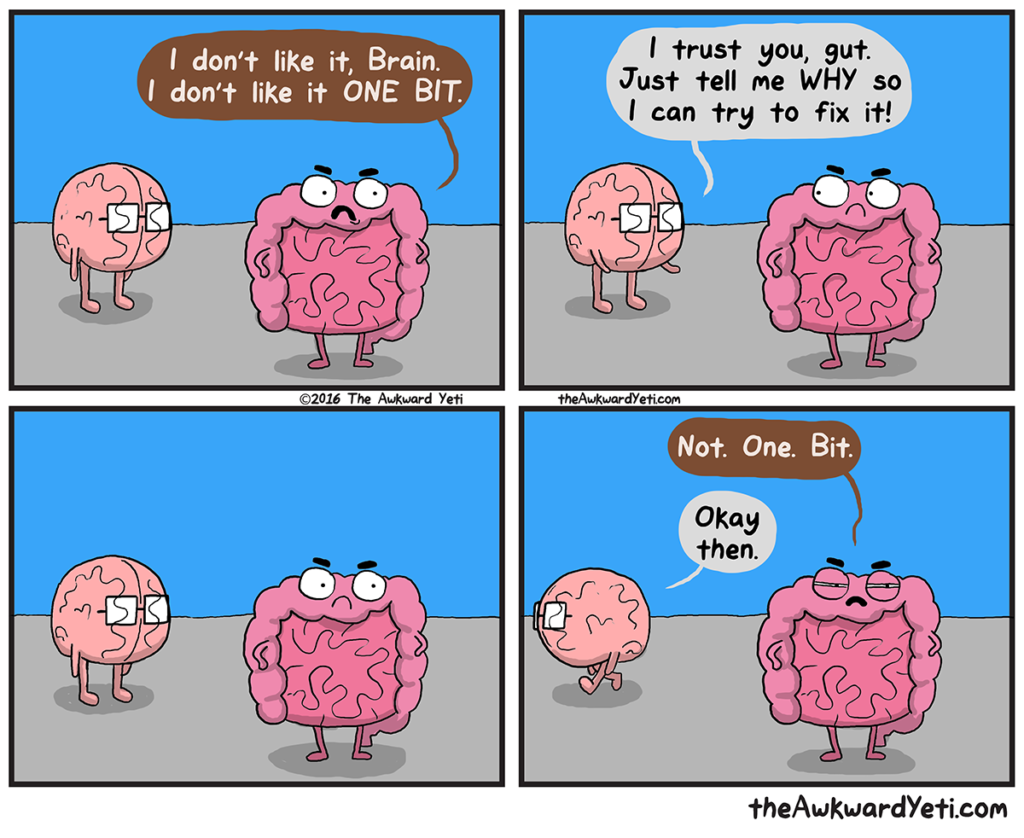
However, intuition is primarily a feeling, and just like any feeling, it may not always reflect the truth of a situation.
When we’re unaware of the source of our feelings, it can be especially hard to tell whether our dislike for a particular option is due to hidden nerves, fear of the unknown, or insecurity. Without understanding what lurks in our psyche, we might mistake them for intuitive hunches and forgo a perfectly good option.
According to Daniel Kahneman, a Nobel Prize-winning behavioral economist, our intuition can often be wrong. He said that people should know when to trust their intuitive judgement and when they should be wary of it. During a speech at the World Business Forum in New York City, he explained:
“Intuition is defined as knowing without knowing how you know—that’s the wrong definition. Because by that definition, you cannot have the wrong intuition. It presupposes that we know, and there is really a prejudice in favor of intuition. We like intuitions to be right.”
Kahneman states that a more accurate and precise definition is that “intuition is thinking that you know without knowing why you do.” By this definition, intuition could be right or wrong. This opens the door to questioning your hunches without jumping to conclusions.
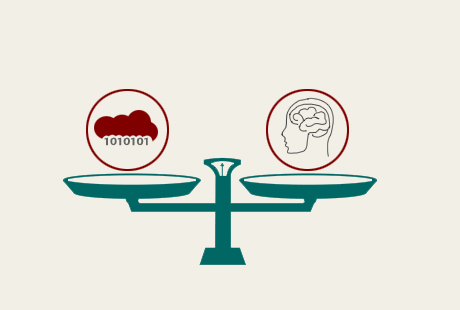
Using our intuition is less about ‘knowing’ the right answer and more about instinctively understanding what information is unimportant and can be discarded.
Gerd Gigerenzer, author of the book ‘Gut Feelings: The Intelligence of the Unconscious’, said this form of discernment enables us to use both intuitive and rational thinking efficiently when making choices:
“In my scientific work, I have hunches. I can’t explain always why I think a certain path is the right way, but I need to trust it and go ahead. I also have the ability to check these hunches and find out what they are about. That’s the science part. Now, in private life, I rely on instinct. For instance, when I first met my wife, I didn’t do computations. Nor did she.”
Our intuitive senses provide a quicker and more efficient shortcut to making decisions in a world where we’re bombarded with choices from moment to moment. We don’t always have the time to engage in lengthy and detailed analysis. However, intuition is not helpful in all situations.
Before you trust your gut, check to see if you identify with one of these situations where your intuition may not be a reliable source of information:
1. You don’t have enough experience: Intuition is valid in certain types of decisions. You can trust it in areas of life where you have a lot of experience and where your mind has had time to understand and recognize various patterns. If you’ve ever met a professional in any field, you’ll see that they don’t need to consult books or think as hard as novices when making decisions. All the experience they have accumulated has given them the ability to notice patterns and make instant, intuitive judgements. When you have little or no experience, you are essentially taking a leap into the unknown – a lot of what you do will just be guesswork.
2. You’re too emotional about the issue: An emotion is fleeting and unstable, and if we’re not self-aware, it can affect how we make sense of our circumstances. Feelings determine the internal weather of your inner world. When your feelings are highly charged, it’s like having a storm cloud that blocks that quiet, inner knowing from being clearly heard. If you sense that you’re too attached and emotionally invested in a situation, take steps to get grounded and return to balance before you consult your intuition as a source of guidance.
3. When you’re unaware of your blind spots: The subconscious mind runs on auto-mode and responds to situations based on memory and instinct. We also develop generic ways of thinking, known as ‘heuristics’, which cause blind spots that skew reality. These mental shortcuts can result in intuitive-based decisions that lead us astray. For example, if you’re under the influence of the availability heuristic, you tend to remember events that occur more frequently or those that are more dramatic. This affects the accuracy of your judgement.
Whether you see intuition as the whispers of your Higher Self, or as a nudge from a divine source, it can be an invaluable tool to find your True North, if you learn how to interpret it correctly. Like a voyager consulting a compass, you’ll be guided through the foggy and dark phases of life and into places where you can live fully and purposefully.
All my best on your journey,
Seline

Question for you: Has your intuition ever been wrong? If so, what do you think caused your interpretation to be off the mark?
Did you like this post? Sign up below, and I’ll send you more awesome posts like this every week.

Hey Seline – I too have long felt that people put far too much focus and attention to their ‘gut feeling’ and dont even know what it is they are trusting. I have heard people say to trust your gut instinct and feelings yet most people cannot even really describe what that is or what that even means. It is all about balance to me- sound mind, heartfelt feelings, emotions, and all the rest. Gut feelings along cannot decide what is right. Great read. 🙂
Intuition has been a very serious & powerful source of energy in my previous experiences as well as my current feelings…when you have a feeling of something or someone for a substantial amount of time and it just doesn’t seem to escape you as well as feel that strong energy when you are in the presence of this individual, it has to let you know that it’s more than just Intuition….it’s a powerful force that only 2 people can feel whether they are standing by each other’s side or within their deep train of thought.
In my case,
I never rely solely on my intuitive thinking, without first considering what the consequences would be if my intuition is wrong.
As stated earlier, balance is the key, at least for me anyway.
Time and place are major considerations as well.
Before taking the leap of faith, and acting on that vision that flashed across my mind in a split second, I always ask myself this very important question:
Can I afford the loss if my intuition is wrong?
If the answer is yes, I might take the leap of faith.
If the answer is no, I stick to reason and logical thinking.
As stated previously, timing is an important factor to consider when considering whether or not to employ intuition, because rational analysis requires time, and in a crunch situation, time is an asset that you have very little of.
—Kirby Shobe
Thank you for sharing Kirby. 🙂